

What actually makes a kitchen good
#35: On evidence of a life lived, drawers in the wrong place ruining your life, and the kitchen that could only exist exactly where it is.

I’ve been knee-deep in kitchen design lately. Not my own kitchen, but other people’s.
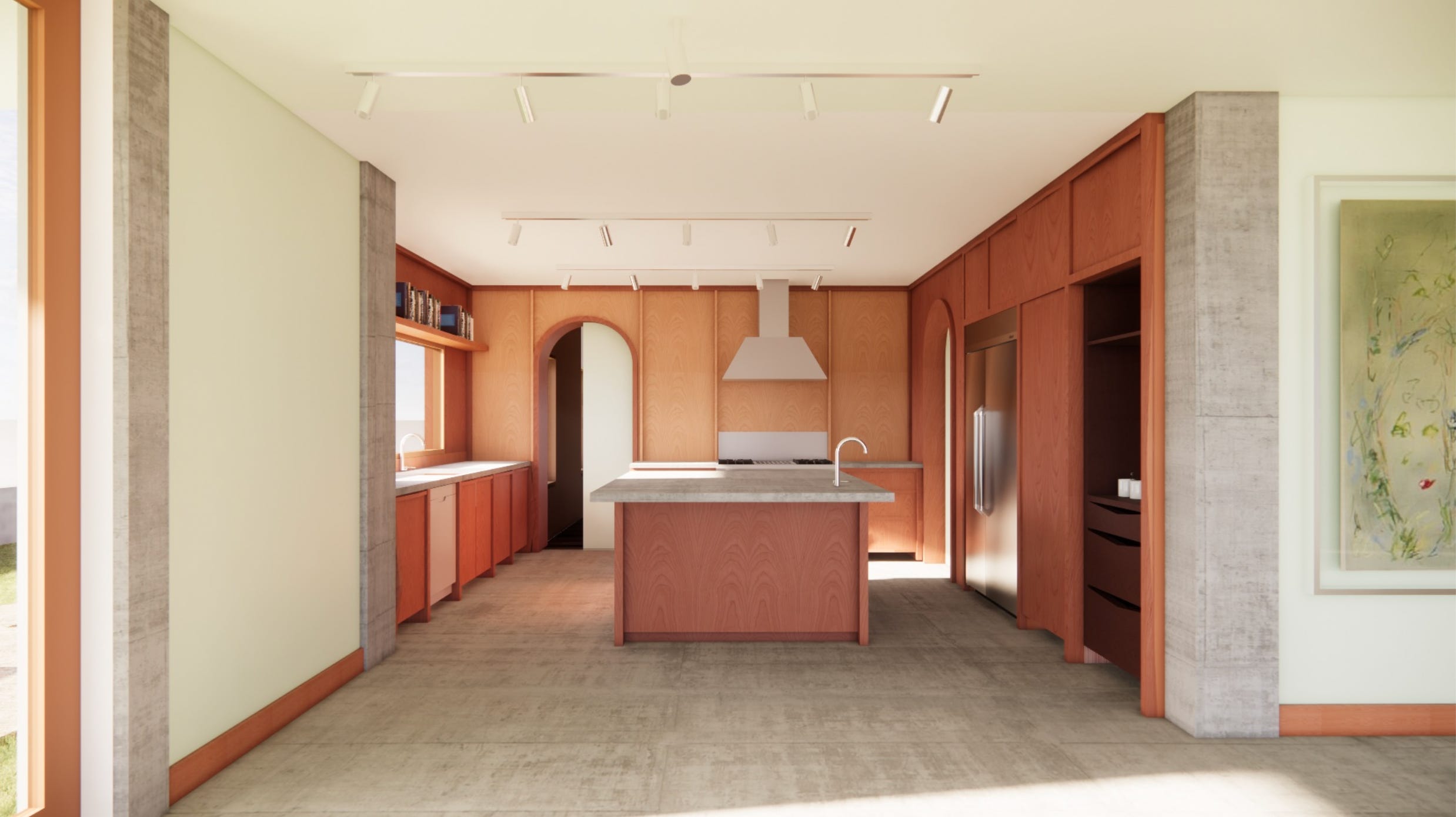
I’ve been knee-deep in kitchen design lately. Not my own kitchen, but other people’s. Inside rendering software. On job sites. Arguing over cabinet widths and drawer locations as though civilization depends on them.
It might.
And spending this much time inside one room has made me realize something I couldn’t quite articulate before: what actually makes a kitchen good.
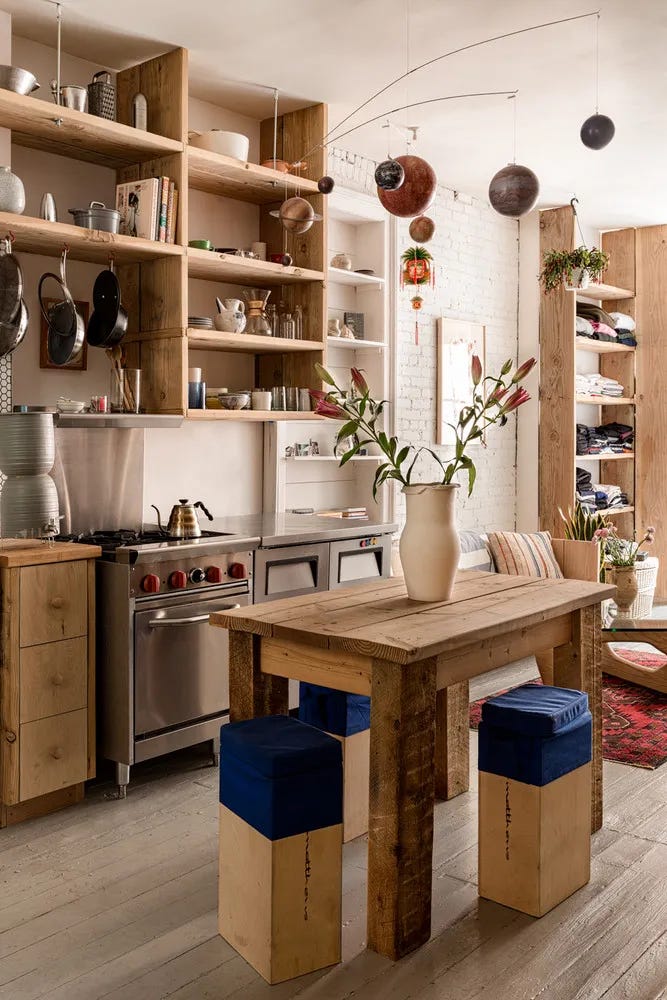
The first kitchen I ever worked on wasn’t one I designed. I was a student, working a summer job before architecture school. It wasn’t large. The finishes weren’t expensive. It wasn’t pristine.
It felt alive.
Pots hung on the wall. Cookbooks sat beside dishes. Everything that would normally be hidden inside a cabinet had become integral to the architecture. The space told you something about the person who lived there.
At the time I didn’t know why I found it so compelling. I only knew it felt fundamentally different from every other kitchen I had seen. Most kitchens are designed around concealment. This one allowed the everyday objects to be the design.
Looking back, I think that apartment introduced me to an idea I’ve spent the last decade thinking about.
A Room Defined by Its Contents
I’ve always found it strange that when people talk about kitchens, they mostly talk about wood selections, a statement backsplash, hood style, door styles, countertop profiles, appliances.
But the things I remember most about a kitchen are rarely any of those things.
I remember the bowl of citrus. The cookbook stained with olive oil. The weird thrifted cutting board that’s always leaning against the backsplash. The funny mouse knife they placed on a charcuterie board. The evidence of the somebody that actually lives there.
The best kitchens don’t hide everyday life, they frame it.
To me, the strangest obsession in contemporary kitchen design is how much effort we spend disguising kitchens. Hidden refrigerators, hidden coffee stations, hidden storage, folding doors that conceal the entire room. We spend tens — sometimes hundreds — of thousands of dollars creating a kitchen and then immediately start thinking about the best ways of erasing evidence of what happens inside it.
Somewhere along the way, a cutting board became something to hide. A toaster became a problem. A fruit bowl became a necessary prop rather than actual fruit someone actually bought.
The goal became a kitchen that always looked untouched.
Which is strange, because an untouched kitchen is a kitchen nobody loves.
Why I’m Spiraling
Not for nothing, this really is all that deep.
A thoughtful drawer placement could make every single day of your life just a little easier.
A drawer placed two steps too far away could make every single breakfast just slightly more annoying.
And then my brain begins its descent.
Two extra steps to get the spatula. Maybe that’s ten extra seconds a day.
Ten seconds becomes an hour a year.
An hour becomes a week over a lifetime.
A week spent walking to a poorly located utensil drawer.
A week in which you could have learned Italian.
Or fallen in love.
Instead you’re shuffling back and forth across the kitchen looking for a whisk.
You die alone.
The point (other than the existential dread) is that a kitchen is not an aesthetic decision. It’s a quality of life decision. Where things live in a kitchen determines how you feel in it every single morning for as long as you live there. It’s deepe than the cabinet color.
This might just be my anxiety talking, but are you willing to risk it?
The Character-Giving Elements
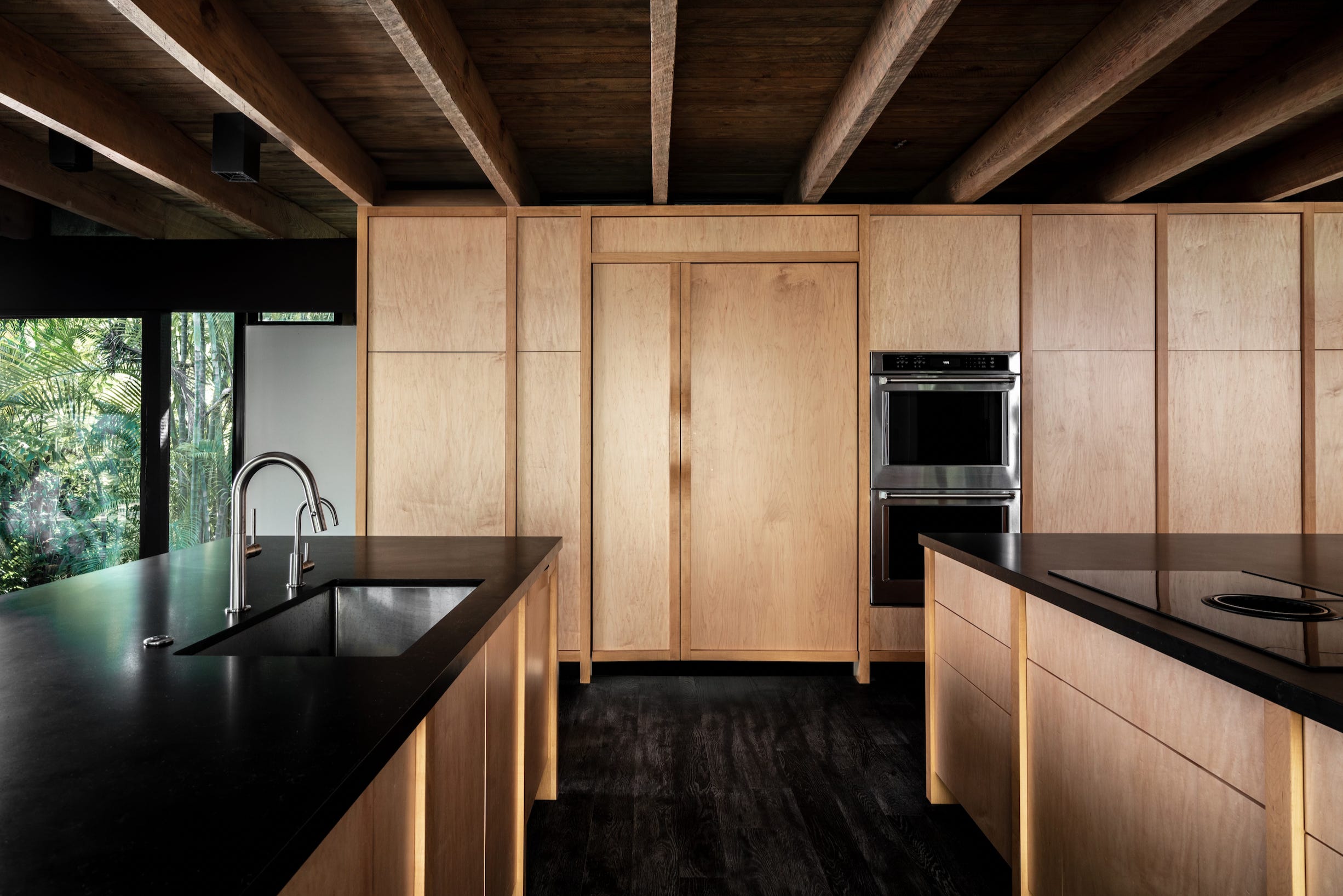
One of my favorite kitchens we’ve worked on belongs to a mid-century home in Coconut Grove. The design began with a question that had very little to do with kitchens: what happens if the architecture doesn’t stop at the exterior wall?
The house is organized by a strong structural rhythm- posts, beams, and bays establish a clear order throughout. The exposed wood structure overhead is the character of the house.
Rather than inserting a kitchen into that framework, we wanted the kitchen to feel as though it resulted from the same system. The cabinetry became an extension of the architecture, creating an infrastructure inside of which a kitchen happens.
The lesson followed me into projects that looked completely different.
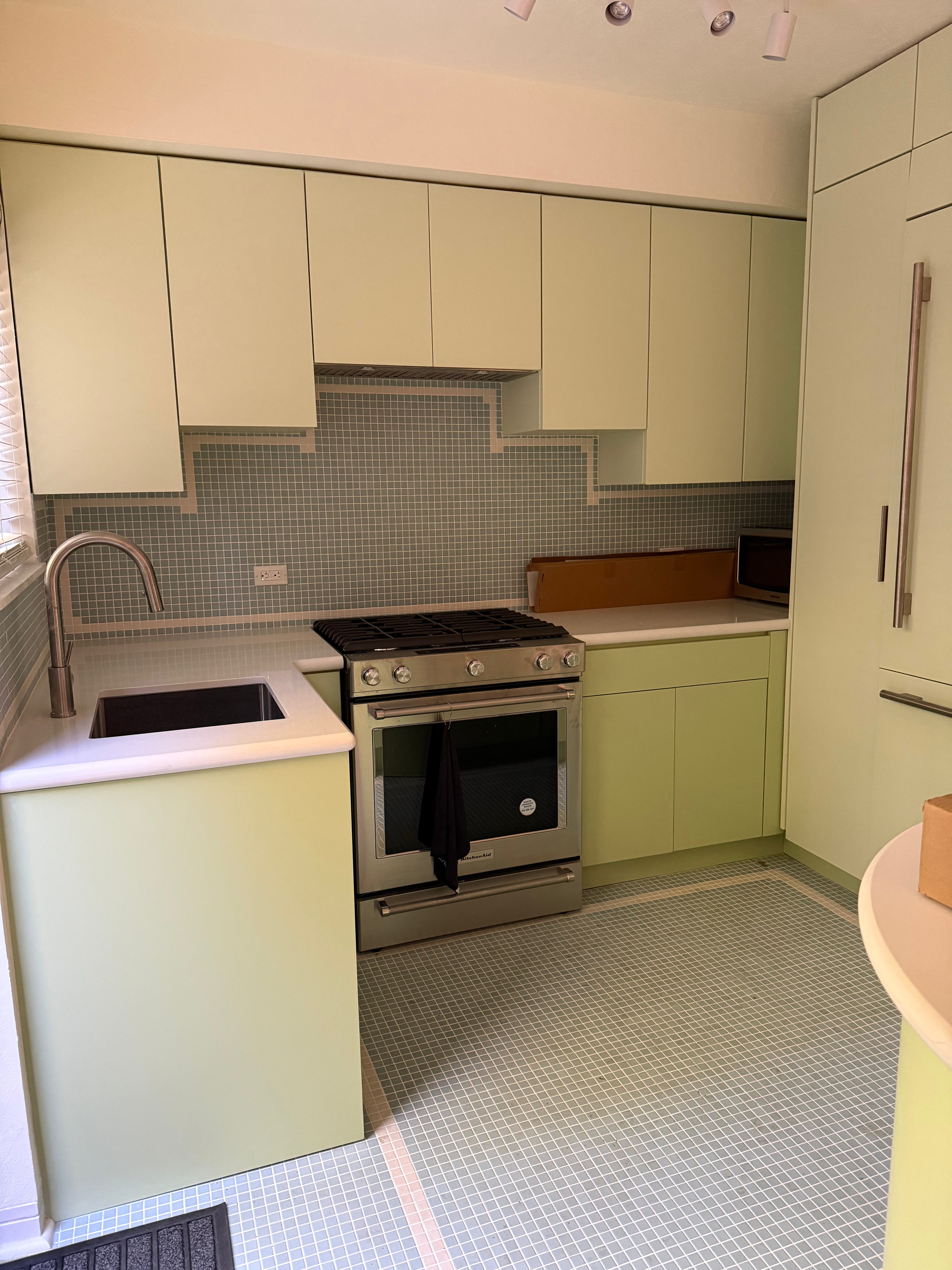
Another kitchen we designed sat inside a historic Art Deco townhouse. The kitchen wasn’t large, which meant storage wasn’t optional. it was the project. Rather than treating upper cabinets as a necessary evil, we leaned into them. We used standard cabinet dimensions and allowed their varying heights to create a stepped profile across the wall, forming an Art Deco motif.
What started as a storage problem became the kitchen’s defining architectural gesture. The detail wasn’t applied decoration. It emerged from the practical requirements of the room. The storage became the design element rather than something to overcome.
How to Make a Really Good Kitchen
After looking at hundreds of kitchens, I believe that the best ones don’t begin with a vibe. They begin with acceptance. Acceptance of the house you have, the weird specific habits you actually live, the constraints you can’t change.
The kitchens I love most don’t overcome their limitations. They build on them.
Before you choose a cabinet color or a countertop material, here is what I’d actually ask:
The questions worth asking first
What is the defining condition of this kitchen? The low ceiling, the awkward layout, the lack of storage, the beautiful view, the collection of cookbooks you reach for before every meal. Start there.
Where do you actually stand when you cook? Map your real movement through the space before making a single layout decision. The working triangle- sink, stove, refrigerator, should follow each other in the most natural path.
What do you reach for every morning? Those things should live within arm’s reach of where you stand. Everything else can live further away.
What do you actually want to hide versus what have you been told to hide? A beautiful copper pot on a hook is not a problem. A toaster you use every day hidden behind a folding door you have to open and close every morning is a problem.
Does the kitchen feel like it belongs to the house? Or does it feel inserted? The best kitchens extend the language as the rest of the architecture. Find that language first.
What is the one thing about this kitchen that could only exist exactly here? Find it. Build around it. That’s the detail that will make the kitchen memorable.
The most memorable kitchens aren’t the ones that look like every other kitchen. They’re the ones that could only exist exactly where they are. That belong to a specific person in a specific place living a specific life.
That’s not a style. That’s a f*cking kitchen.
The cabinet + tile layout in that art deco kitchen is amazing 💗